
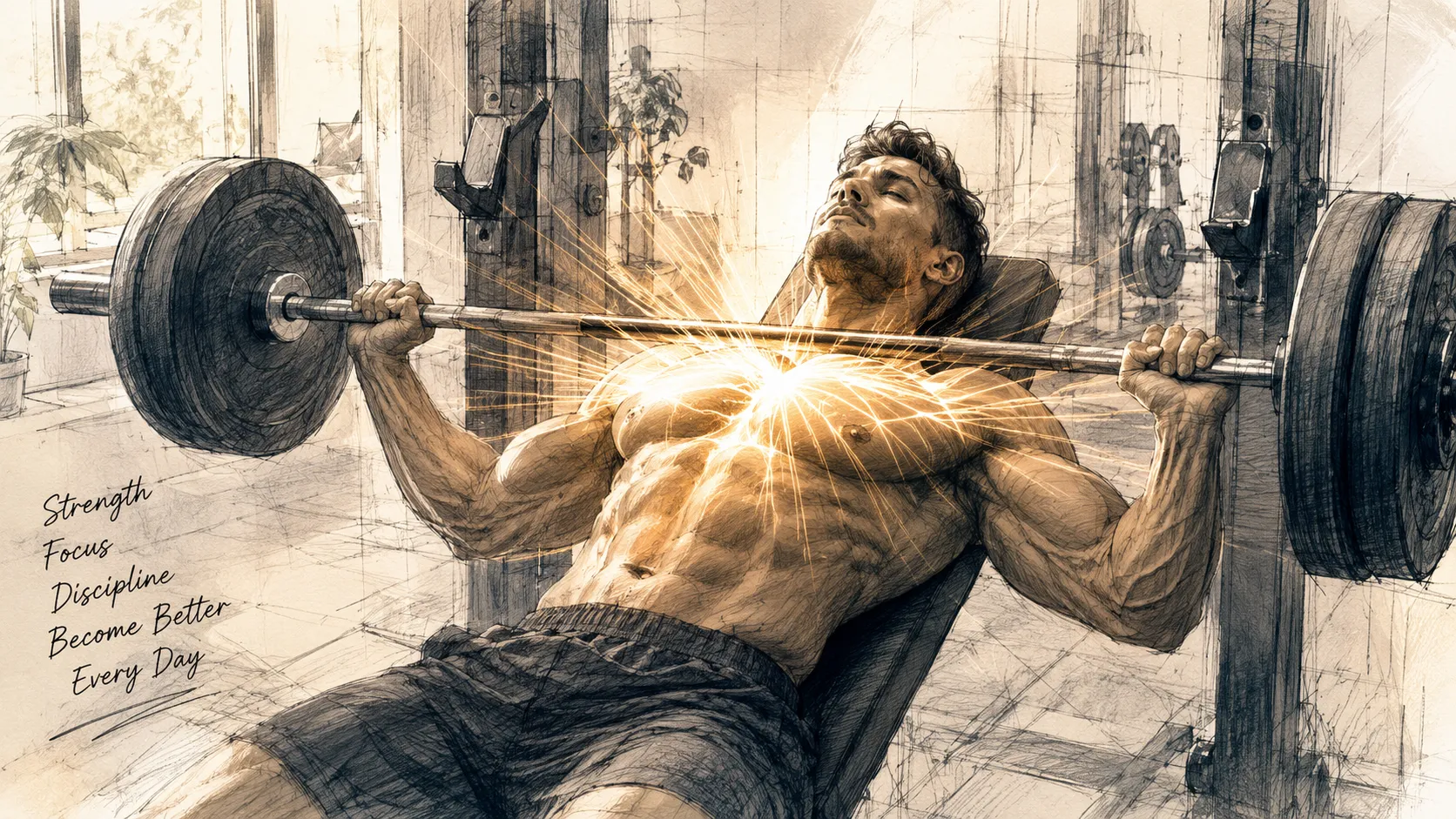
The bench press has earned its reputation as one of the most effective upper-body exercises ever created. Walk into almost any gym and you’ll hear the familiar question: “How much do you bench?” Yet despite its popularity, many lifters still wonder exactly which part of the chest the bench press works. Is it the upper chest, middle chest, lower chest, or all of them equally?
The answer is more nuanced than most people think. The bench press primarily targets the pectoralis major, the large fan-shaped muscle that covers most of your chest. However, different bench angles, grip widths, and lifting techniques can significantly change which fibers receive the greatest stimulus. Research examining electromyographic (EMG) activity shows that flat, incline, and decline bench variations each emphasize different portions of the chest while also involving the shoulders and triceps to varying degrees. Understanding these details can dramatically improve your training results. Instead of simply moving weight from point A to point B, you’ll learn how to make every repetition work harder for chest development. Whether your goal is building a thicker chest, improving strength, or overcoming a plateau, knowing exactly how the bench press affects your muscles can make a noticeable difference.
Understanding the Anatomy of the Chest
The Pectoralis Major
The pectoralis major is the primary muscle responsible for chest size and strength. It consists of two major regions: the clavicular head, often called the upper chest, and the sternocostal head, which forms the middle and lower portions of the chest. While these sections are part of the same muscle, their fiber directions differ slightly, which explains why changing the bench angle alters muscle emphasis.
Think of the pectoralis major like a large hand-held fan. All the fibers connect and work together, but different portions become more active depending on the direction of movement. During a standard flat bench press, both regions contribute substantially to pushing the weight away from your body. Research indicates that the traditional flat bench press generates particularly strong activation in the sternal portion of the pectoralis major, making it highly effective for overall chest development.
The Pectoralis Minor
Beneath the pectoralis major lies the pectoralis minor, a smaller muscle that helps stabilize the shoulder blade. While it doesn’t contribute heavily to the visible pressing motion, it plays a crucial supporting role. A stable shoulder blade allows the larger chest muscles to generate force more efficiently.
Many lifters overlook the importance of these stabilizing muscles. It’s similar to building a house: the foundation may not be visible, but it determines how well the structure performs. Healthy shoulder mechanics and strong stabilizers create better conditions for chest activation and long-term progress.
The Primary Chest Muscles Activated During Bench Press
Sternal Head Activation
When most people perform a traditional flat bench press, the sternocostal head of the pectoralis major does the majority of the work. This region creates the thick, dense appearance associated with a well-developed chest. Scientific reviews comparing bench press variations found that the flat bench press often produces greater activation of the sternal fibers than incline variations. This makes sense biomechanically. During a flat press, the line of force aligns closely with the fiber direction of the middle chest. The result is substantial tension across a large portion of the muscle. That’s one reason the flat bench press remains a cornerstone exercise in powerlifting, bodybuilding, and general strength training.
The movement also allows many lifters to handle their heaviest loads. Greater loads often mean greater mechanical tension, one of the primary drivers of muscle growth. While heavier isn’t always better, the ability to progressively overload the chest over time contributes significantly to hypertrophy.
Clavicular Head Activation
The upper chest, known as the clavicular head, becomes increasingly active as the bench angle rises. Studies examining incline pressing demonstrate that moderate inclines shift more emphasis toward the upper chest fibers while also increasing shoulder involvement. Many lifters struggle with upper chest development because they rely exclusively on flat pressing. The upper chest fibers pull at a slightly different angle, meaning they benefit from exercises that align with their natural movement pattern. This is where incline pressing becomes valuable.
That doesn’t mean the flat bench ignores the upper chest completely. Rather, it distributes the workload more evenly. If your goal is complete chest development, including both flat and incline presses often produces the best results.
How the Bench Press Creates Chest Growth
Mechanical Tension and Muscle Recruitment
Muscle growth isn’t magic. It occurs because muscles are forced to adapt to stress. During the bench press, your chest fibers generate force to overcome resistance. The heavier the load and the better the technique, the greater the recruitment of muscle fibers.
Imagine pulling on a thick rope with a team of people. A light load requires only a few team members. A heavy load demands everyone contribute. The same principle applies to muscle recruitment. As resistance increases, more muscle fibers become involved.
Research consistently identifies mechanical tension as a primary driver of hypertrophy. The bench press excels because it allows progressive overload while training multiple muscle groups simultaneously. Combined with adequate recovery and nutrition, this creates an environment where the chest can grow larger and stronger over time.
How Grip Width Changes Muscle Emphasis
Wide Grip Bench Press
Grip width significantly influences muscle recruitment patterns. A wider grip shortens the range of motion and often increases chest involvement. Recent EMG evidence suggests wider grips can increase pectoral activation while reducing triceps contribution compared with narrower grips. A wide grip places the upper arms farther away from the torso, creating a mechanical advantage for the chest muscles. Many powerlifters favor this style because it can improve leverage and reduce bar travel distance.
That said, going excessively wide may increase shoulder stress. The goal isn’t to stretch your hands as far apart as possible. Instead, choose a grip that feels stable while allowing strong chest engagement.
Medium Grip Bench Press
For most lifters, a medium grip provides the best balance between strength, comfort, and muscle activation. This grip typically positions the forearms vertically when the bar touches the chest.
A moderate grip distributes the workload effectively among the chest, shoulders, and triceps. It also tends to be the most sustainable option for long-term training because it minimizes excessive joint stress while maximizing overall force production.
Close Grip Bench Press
A close-grip bench press shifts more work toward the triceps. While the chest remains active, elbow extension becomes a larger component of the movement. Fitness experts frequently recommend the close-grip variation as a triceps-building accessory rather than a primary chest exercise. This doesn’t mean close-grip pressing is ineffective. Quite the opposite. Strong triceps often translate into stronger overall bench pressing performance. Many advanced lifters use close-grip presses to strengthen lockout strength and build arm size.
What Your Shoulders and Triceps Contribute to the Lift
Role of the Anterior Deltoids
Your front shoulders, or anterior deltoids, play a major supporting role during pressing movements. They help move the upper arm forward and stabilize the shoulder joint throughout the lift.
Shoulder involvement increases as the bench angle rises. This explains why incline pressing often feels more demanding on the front delts than flat pressing. Research consistently shows that steeper inclines shift more workload away from the chest and toward the shoulders. When the shoulders become overly dominant, chest activation may decrease. That’s why proper technique and appropriate bench angles matter so much.
Role of the Triceps
The triceps are responsible for extending the elbow and finishing the press. Without strong triceps, even a powerful chest cannot complete heavy lifts effectively.
Think of the chest as the engine and the triceps as the transmission. Both must function efficiently for optimal performance. Many bench press plateaus are actually triceps limitations rather than chest limitations.
Flat, Incline, and Decline Bench Variations Compared
Flat Bench Press
The flat bench press remains the gold standard for overall chest development. It balances activation across the pectoralis major while allowing significant loading potential. Research reviews indicate that traditional horizontal bench pressing produces very high pectoralis major involvement.
Incline Bench Press
Incline pressing places greater emphasis on the clavicular head of the chest. Most experts recommend angles between 15 and 30 degrees because steeper inclines begin to resemble shoulder presses.
Decline Bench Press
Decline pressing shifts emphasis toward the lower chest fibers. Research suggests the decline variation can increase activation in portions of the lower pectoral region while reducing shoulder involvement.
| Variation | Primary Emphasis | Shoulder Involvement | Typical Strength Potential |
|---|---|---|---|
| Flat Bench | Overall chest | Moderate | High |
| Incline Bench | Upper chest | High | Moderate |
| Decline Bench | Lower chest | Lower | High |
Why Proper Form Matters for Chest Activation
Positioning the Shoulder Blades
One of the most overlooked aspects of bench pressing is shoulder blade positioning. Retracting and depressing the shoulder blades creates a stable platform for pressing and helps keep tension on the chest.
When the shoulders roll forward, the front delts often take over. This not only reduces chest activation but can also increase injury risk. Coaches commonly recommend squeezing the shoulder blades together before unracking the bar and maintaining that position throughout the set.
Elbow Path and Bar Path
The path of your elbows dramatically affects muscle recruitment. Excessive elbow flare often places unnecessary stress on the shoulders. Keeping the elbows at roughly 45 to 75 degrees from the torso generally creates a stronger and safer pressing position. The bar should travel in a controlled path toward the lower or middle chest rather than directly toward the neck. Consistency here improves force transfer and chest engagement.
Common Bench Press Mistakes That Shift Tension Away From the Chest
Excessive Shoulder Dominance
Many lifters unintentionally turn the bench press into a shoulder exercise. This often happens when the bench angle is too steep, the shoulders roll forward, or the elbows flare excessively.
The result is predictable: sore shoulders, limited chest growth, and stalled progress. Paying attention to setup and execution can dramatically improve muscle targeting.
Incorrect Grip and Elbow Position
Another common mistake is choosing a grip width that doesn’t suit your anatomy. Too narrow and the triceps dominate. Too wide and the shoulders may become uncomfortable. Similarly, poor elbow positioning can reduce efficiency and increase joint stress.
Technique isn’t just about safety. It’s also about directing tension where you want it. Every technical adjustment influences which muscles work hardest.
Accessory Exercises That Complement Bench Press Training
Best Isolation Movements
Isolation exercises help train the chest through movement patterns that differ from pressing. Effective options include:
- Dumbbell flyes
- Cable flyes
- Pec deck machine
- Single-arm cable crossovers
These movements emphasize chest shortening and squeezing rather than pure pressing strength. They can help create a more complete hypertrophy stimulus.
Best Compound Assistance Exercises
Several compound lifts complement the bench press exceptionally well:
- Incline dumbbell press
- Weighted dips
- Push-ups
- Close-grip bench press
- Landmine press

Dashiell Riggs is a 35-year-old American writer and digital publisher from Richmond, Virginia. He specializes in producing detailed educational content covering strength training, recovery, and healthy living, combining careful research with years of professional blogging experience. Through his work on muscleprogress.xyz, he is committed to publishing accurate, reader-focused articles that emphasize credibility, practical advice, and long-term wellness.